
Quick answer: Pimples on the face form when pores get blocked by oil, dead skin and bacteria. A gentle routine — cleanser, a spot treatment with ingredients like Niacinamide or Salicylic Acid, a light moisturizer and sunscreen — works better than harsh home remedies.
What causes pimples on the face?
- Excess oil: Oily skin, heat and humidity increase oil production.
- Blocked pores: Dead skin cells mix with oil and clog pores.
- Bacteria: Trapped oil allows acne bacteria to grow and cause redness.
- Hormones: Common in teens and during periods or stress.
- Habits: Touching your face, dirty pillowcases and phone screens, heavy makeup.
Types of pimples
- Blackheads and whiteheads: small clogged pores.
- Papules: small red, tender bumps.
- Pustules: red bumps with a white or yellow centre.
- Nodules and cysts: deep, painful lumps — these need a dermatologist.
Pimples on chin, forehead and cheeks
Chin and jawline pimples are often linked to hormones. Forehead pimples can come from oily hair, hair oil or caps. Cheek pimples are often linked to phones, pillowcases and touching your face.
How to treat pimples at home
- Wash your face twice a day with a gentle face wash.
- Use a spot treatment with researched ingredients such as Niacinamide, Salicylic Acid or low-strength Tea Tree Oil.
- Use a light, oil-free moisturizer.
- Wear sunscreen every morning so marks don't darken.
- Don't pick or squeeze pimples.
Home remedies to avoid
Toothpaste, lemon juice, baking soda and undiluted essential oils can burn and irritate skin and often make dark spots worse.
When to see a dermatologist
See a doctor if pimples are deep, painful, leave scars, or don't improve after 2–3 months.
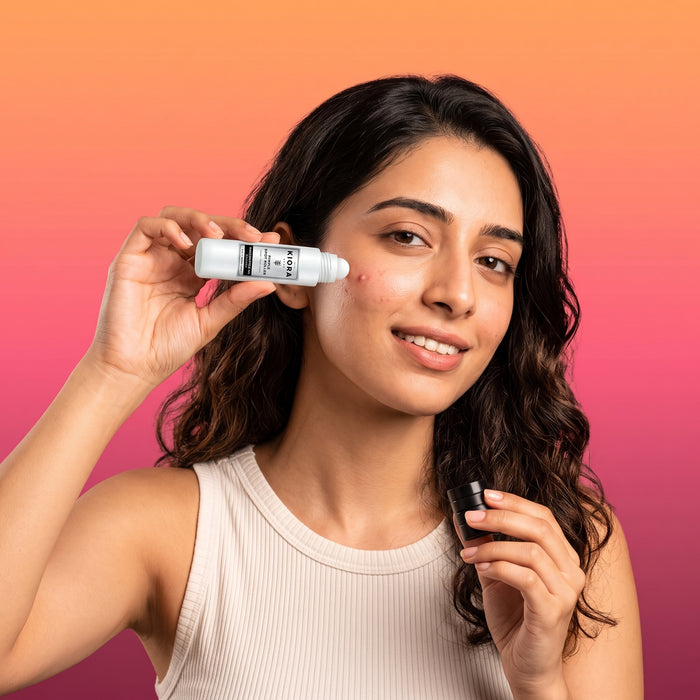
Looking for a mess-free option? Kiora Pimple Spot Roller combines Niacinamide 4%, Tea Tree Oil and Aloe Vera in a roll-on you apply directly to pimples.